For parking, gov and public safety
Turn a license plate into a vehicle record
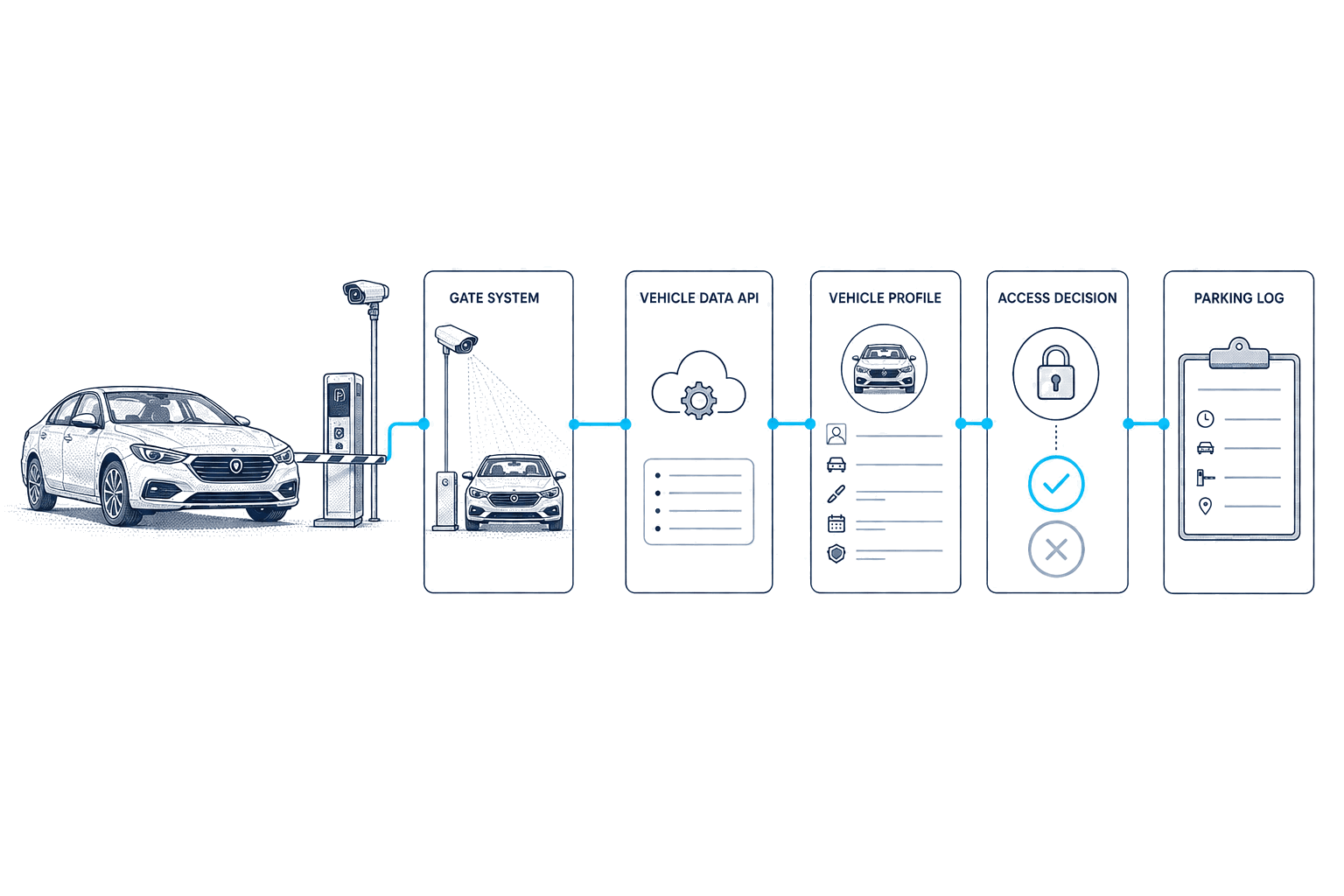
Read a plate from a camera image, decode it into make, model and dimensions, then write the result into your access, enforcement or reservation system.
- Read a plate from a gate or camera image
- Decode it to make, model, color and VIN
- Match height and length to the space you have
Pay only for successful API calls · Free sandbox
Scale and reliability
Running in production today
Plate lookups across 50+ countries, with US coverage the deepest.
- 99.9%
- API uptime
- 275M+
- Vehicle records
- 500M+
- API calls per month
- 50+
- Countries covered
Platform reliability
Coverage depth
Proven at scale
Plate and VIN lookups
Use cases
Where plate data enters your workflow
Access control, enforcement and reservation systems all need the same vehicle identity.
Unattended access
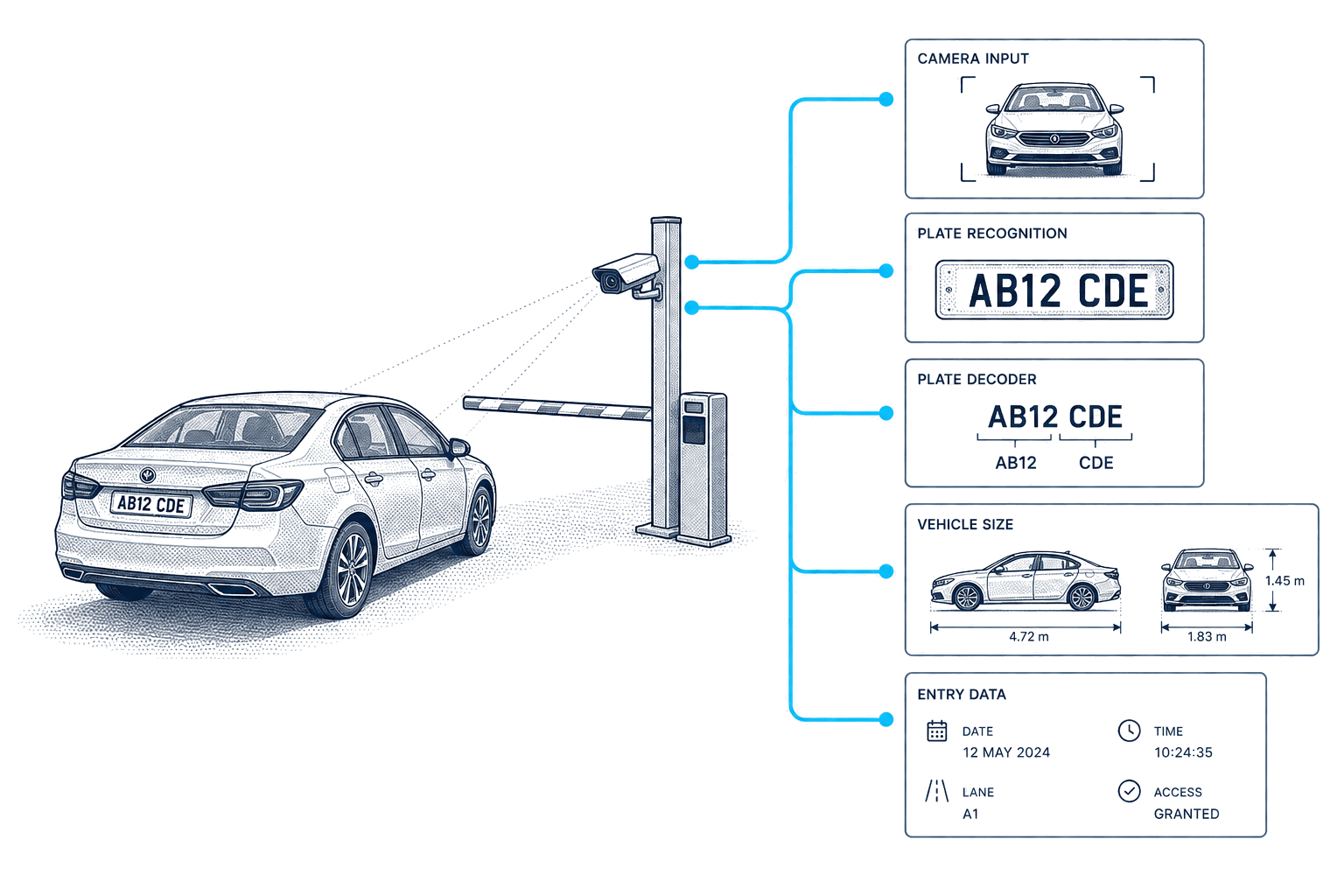
Read the plate from a camera image, decode it, and let your access rules decide.
Valet and attended lots
Photograph the plate instead of typing it, and attach make, model and color.
Permits and enforcement
Match a plate to the vehicle on the permit, and flag the ones that do not agree.
Capabilities
Plate-first vehicle capabilities
Four endpoints cover the path from a camera image to a stored vehicle record.
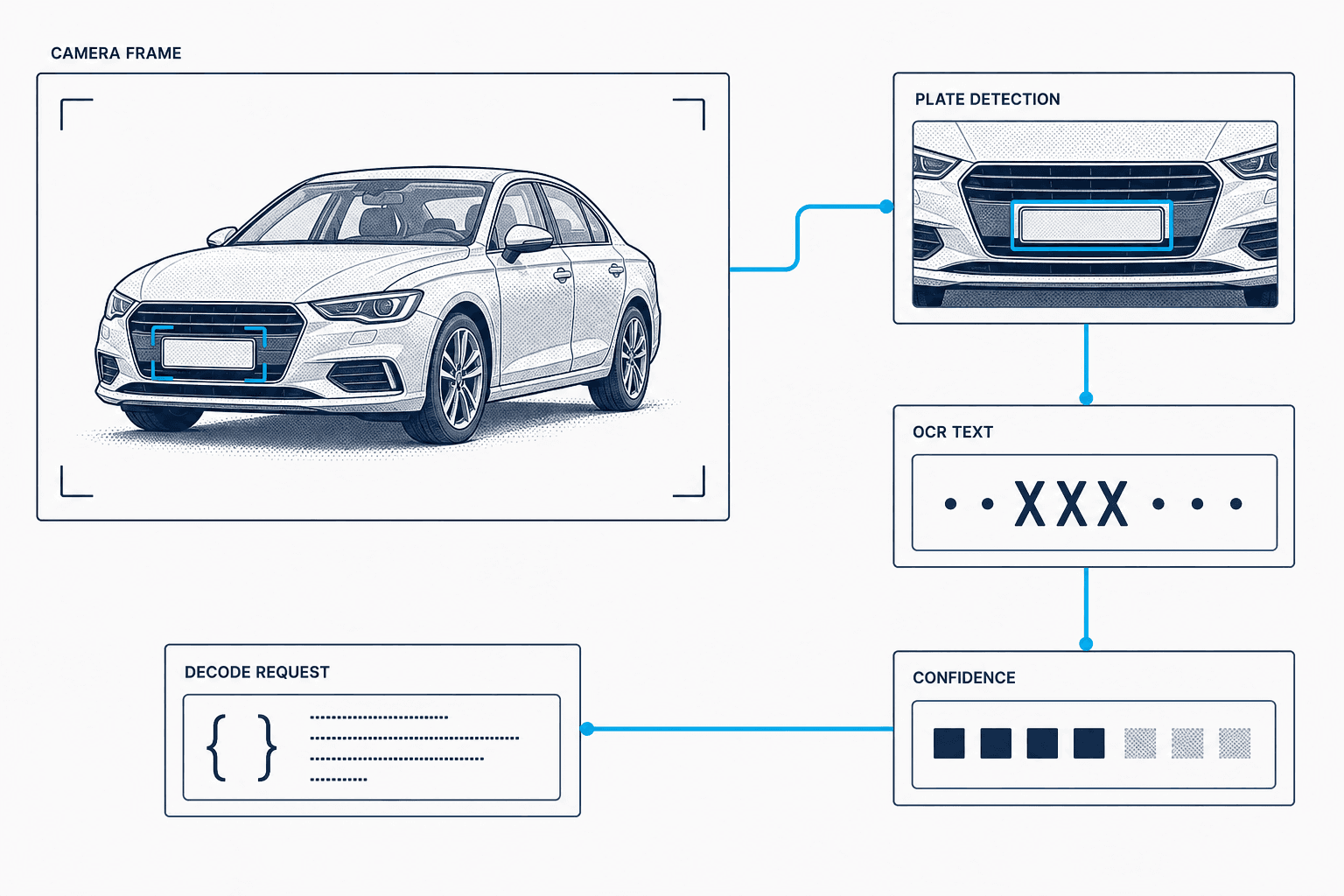
Plate image reading
POST a public image URL and get back the plate number and its region.
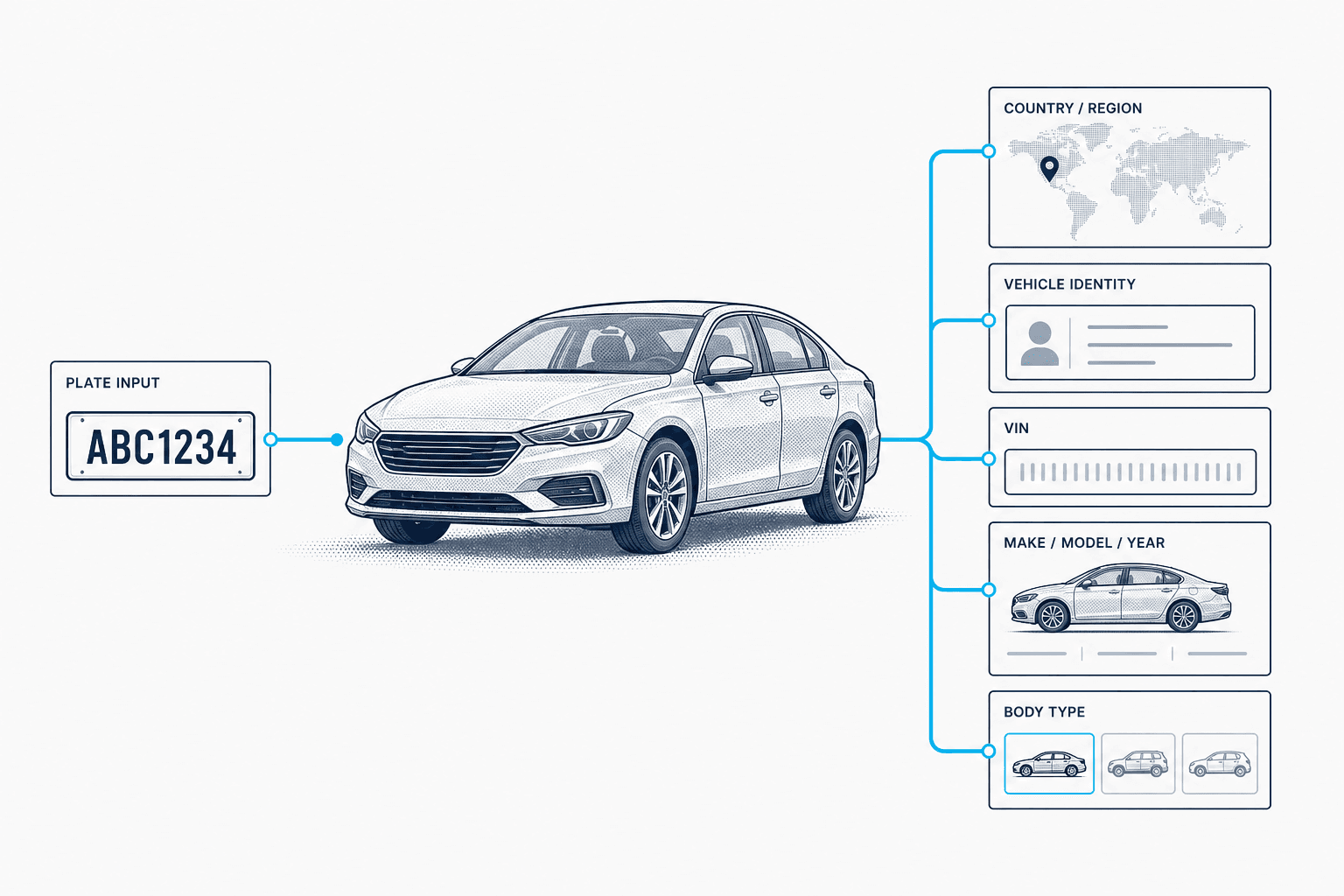
Plate to vehicle identity
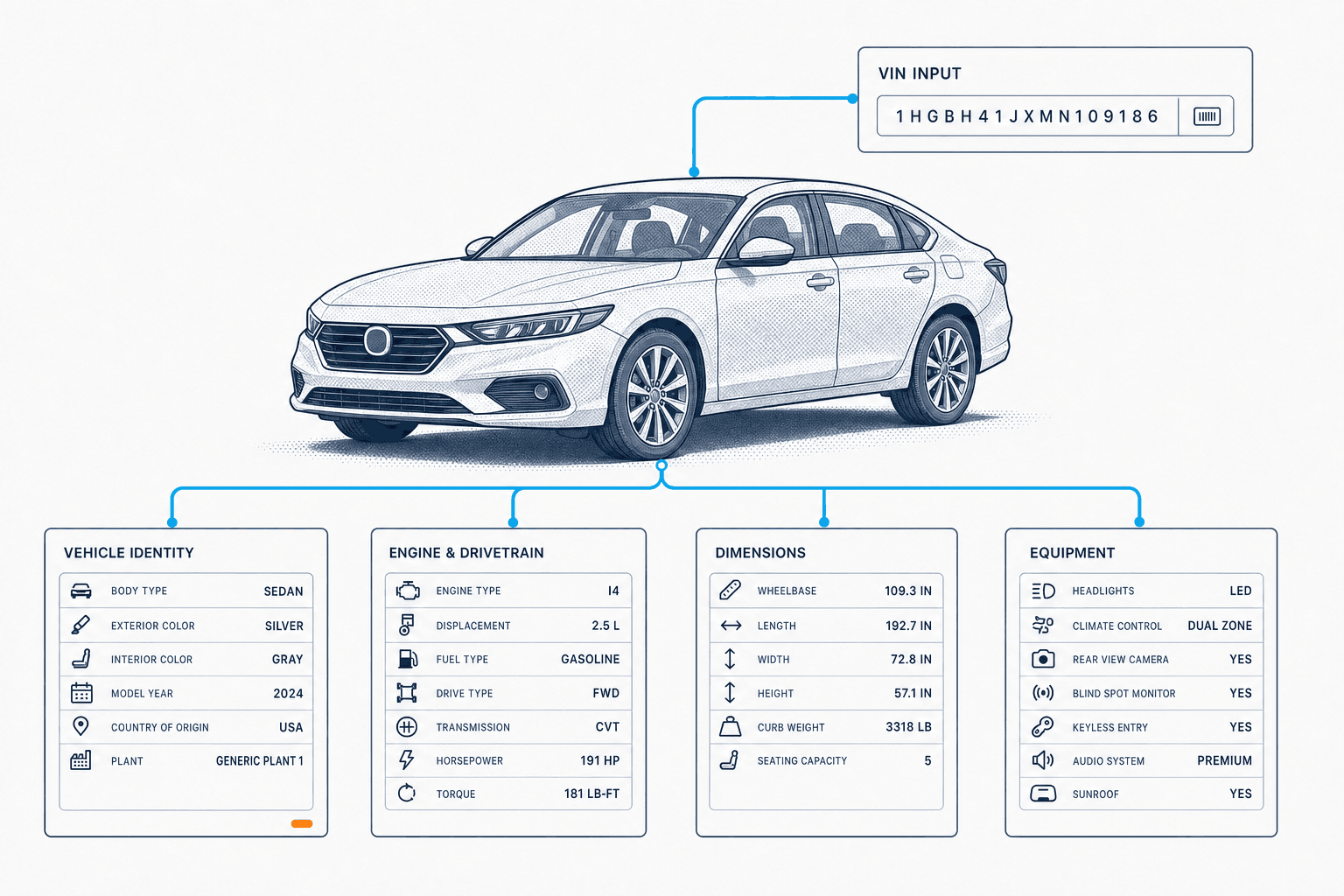
Send a plate with its state or region code to get make, model, color and VIN.
Dimensions and fuel type
Decode the returned VIN for height, length, width, weight and fuel type.
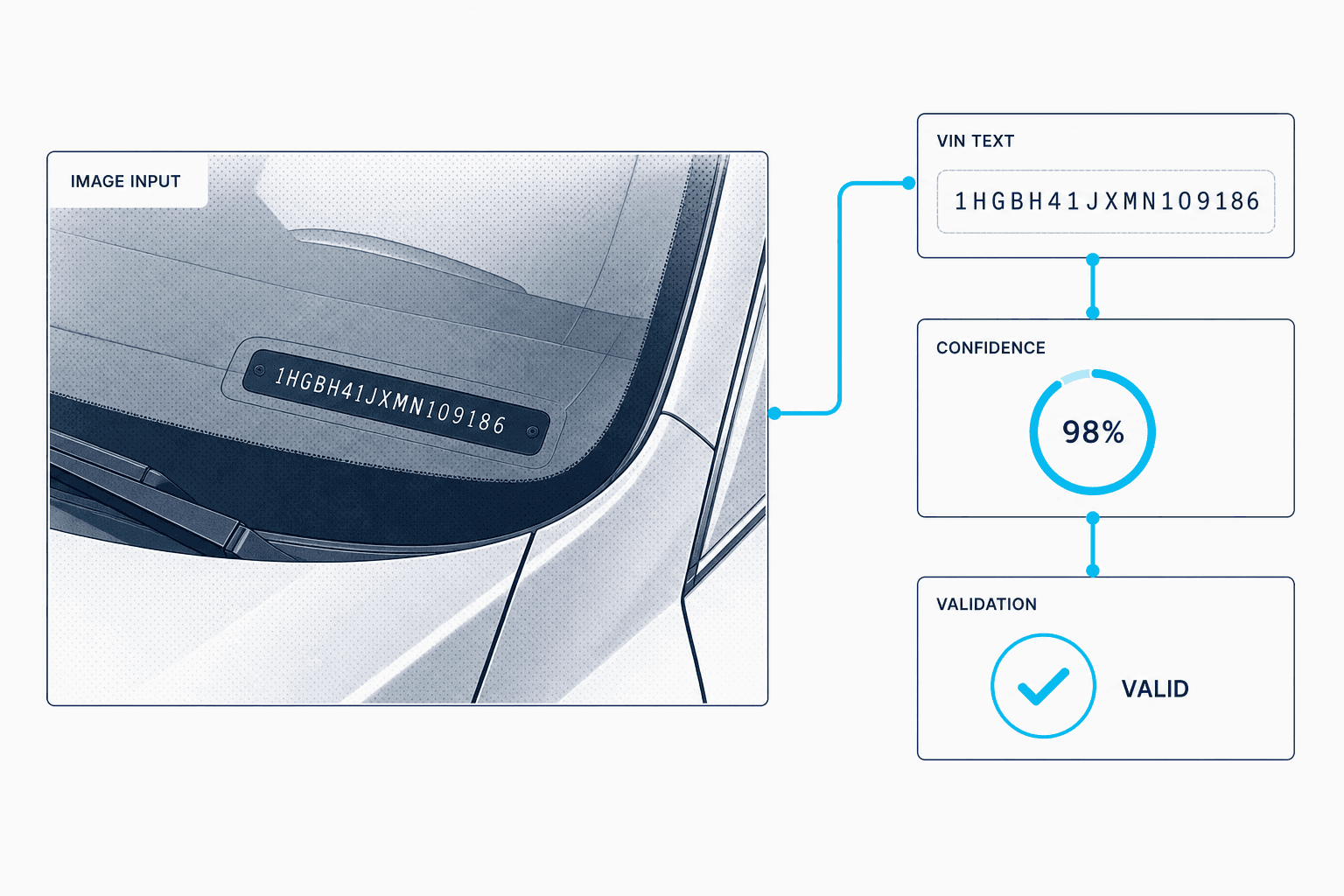
VIN from a photo
Read a VIN from a dashboard, door plate or paperwork image at intake.
Enterprise
Across sites, campuses and jurisdictions
One integration and one response shape across every garage, lot, campus and district.
One contract across every site
The same request and JSON response works at every location you operate.
Key benefit
New sites inherit the integration instead of repeating it.
Records that reconcile
Normalized make, model and type fields keep lot logs consistent between sites.
Key benefit
Reporting stops depending on how each attendant typed it.
Volume without commitment
Start on a free sandbox key and move to production when the flow works.
Key benefit
Only successful calls count toward a plan's quota.
Implementation
How it works
Four steps to a working parking integration, with or without engineers.
- 1
Get a sandbox key
Sign up with a work email. 100 calls, no credit card, no sales call.
- 2
Pick how you connect
REST and JSON, official SDKs, MCP, Snowflake, n8n or Zapier. See integrations.
- 3
Call the endpoints you need
For parking, that is Plate Recognition, Plate Decoder and Specifications.
- 4
Map the fields once
Field names are stable and documented, so your parking systems map them once.
Products
APIs behind these flows
Each endpoint has its own reference, sandbox and country support notes.
Security and compliance
Enterprise-grade security
Vehicle data is handled to the standards your compliance team expects.
- SOC 2 Type II
- Certified
- GDPR
- Ready
- ISO 27001
- In progress
- 256-bit SSL
- Encryption
FAQ
Frequently asked questions
Not answered here? Contact us and we'll point you at the right endpoint.
More industries
The same platform, nine industries
CarsXE across the automotive ecosystem
Dealership
Build recall, equity and trade-in tools on licensed vehicle data.
Insurance
Quote, underwrite and settle claims on verified vehicle data.
Rental
Identify, ground and resell rental vehicles from one record.
Finance
Check liens, title and collateral value before you fund a loan.
Repair
Decode trouble codes and confirm fitment before the car is on the lift.
Warranty services
Screen eligibility and settle warranty claims from one record.
Auto tech startup
Ship vehicle features without building a data pipeline first.
Fleet management
Vehicle records for every VIN in a fleet, without telematics.
Get started
Start building today
Test drive the CarsXE platform. Sign up with your work email and start on the free sandbox. No credit card required.